

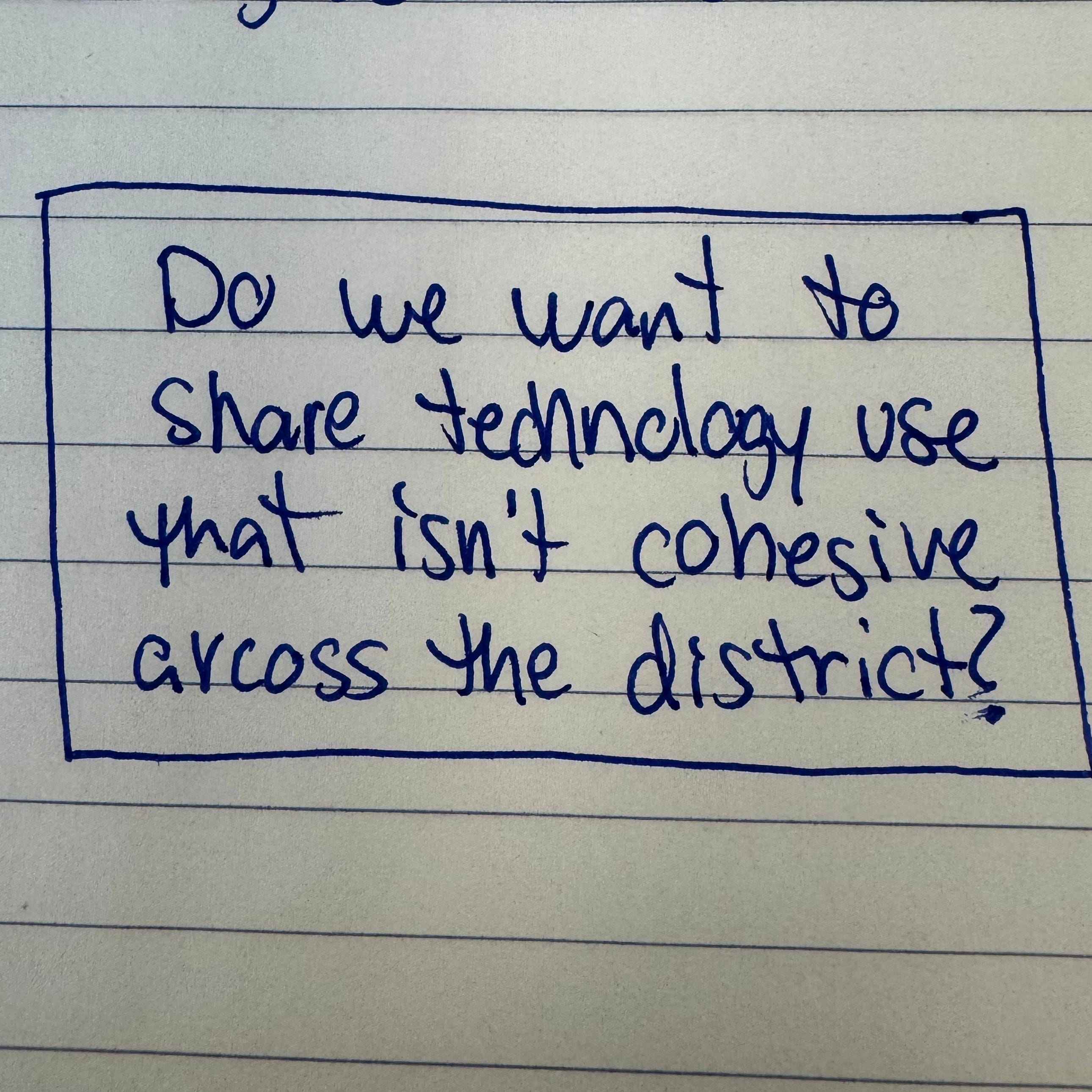
*Disclaimer: I take handwritten notes in meetings for myself. Then I scan with Notability and mark up digitally. It’s better for my brain to use paper first.
That question has been stuck in my head for about two weeks. It’s quickly turning into my anti-mantra. I’m not sure that’s a thing. Hmm, it is now.
Part of my job is working with students, staff, district leaders, and community members to write Technology Use Guidelines.
I’m all for this. Students need adults who are intentional about the devices and digital resources we put in their hands. Leading young people well means leading them everywhere, online included. That’s a lot of responsibility, as it should be.
I also know we have to promote the digital curriculum and resources that support the content areas. Districts spend a lot of money on these. It’s downright embarrassing that some classrooms don’t use them.
It’s even sadder that some classrooms don’t use the devices anywhere near their full capability. Some classrooms actively ignore the devices and the curriculum tools. They sit on a shelf (physically and digitally) until they’re absolutely needed for a snow day.
Is there a place for promoting the digital math centers? The supplemental reading app? Should we help teachers figure out the social studies curriculum? Yes to all of the above. 100%. Full stop. That’s cohesion, and cohesion matters.
Is that the end of it?
Not. At. All.
As a Technology Integration Specialist, I want to promote any technology that adds a deeper, more creative layer on top of the curriculum. Cohesive or not.
You turned an About Me poem into an abstract digital work of art? Let’s share it.
Your students are making videos out of their reading journals? Share it!
Digital portfolios with linked slides that show off their bookshelves? Promote the hell out of that!
Narrative essays linked to QR codes for anyone in the hallway to scan? I’ll tell anyone who will listen.
A stop-motion animation of the science project? I’ll take the pictures!
None of that shows up in a district-wide adoption. But that's exactly where the magic happens.
The devices and apps we put in students’ hands can, and should, be doing so much more. That’s where creativity gets unlocked. That’s where you learn things about the kids in front of you that you’d never otherwise know. That’s how we old people prepare the next generation for jobs that haven’t been invented yet.
Students should be coding. Taking pictures. Recording podcasts. Making movies. Building apps. Connecting with other kids around the globe.
So, do we want to promote technology that isn’t cohesive across the district?
Yes.
Any chance we get.
That’s what we should be promoting.